Sydney Harbour Islands: Which Ones Can You Actually Visit?
Sydney Harbour has eight islands, but not all of them are open to the public. Five can be visited — by ferry, water taxi, or kayak — and each one is quite different from the next. This guide covers all eight, with practical information on how to reach the ones you can visit and what you’ll find when you get there.
Note: Fort Denison is closed in 2026 for renovations. Details are in the Fort Denison section below.
This page contains affiliate links. You can find our full disclosure policy here.
For each island we have given the name Eora name of the island and included some background on its history where known.
Fort Denison /Muddawahnyuh
Fort Denison is closed in 2026 for renovations and is not open to the public. No tours or ferry services are operating to the island at this time.
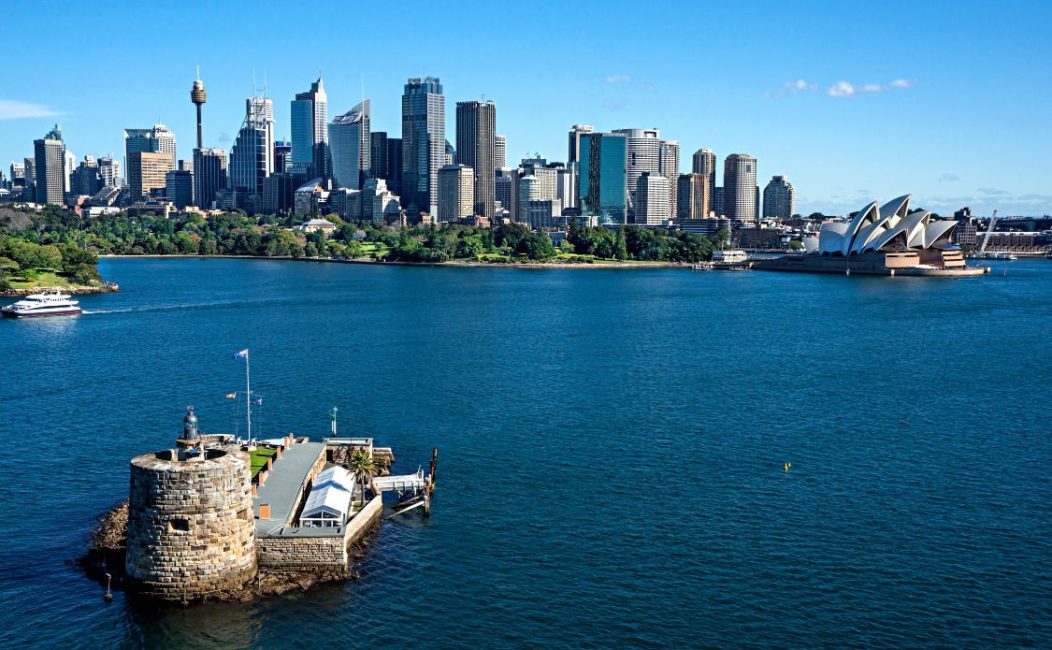
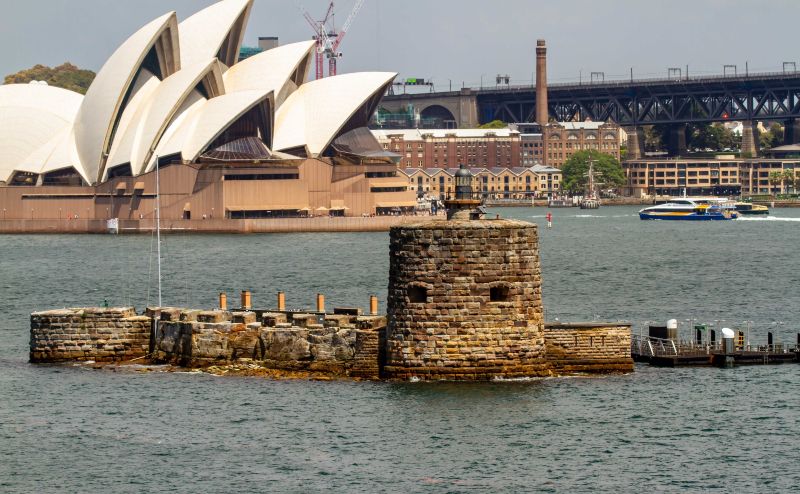
Fort Denison is the most photographed of Sydney’s harbour islands, sitting just off Mrs Macquaries Point with a clear line of sight to both the Opera House and the Harbour Bridge.
The Cadigal people knew this rocky outcrop as Muddawahnyuh. Early colonists called it Pinchgut Island, a name most historians attribute to the meagre rations given to convicts who were sent here as punishment, though it may also reference a nautical term for a narrow section of the harbour.
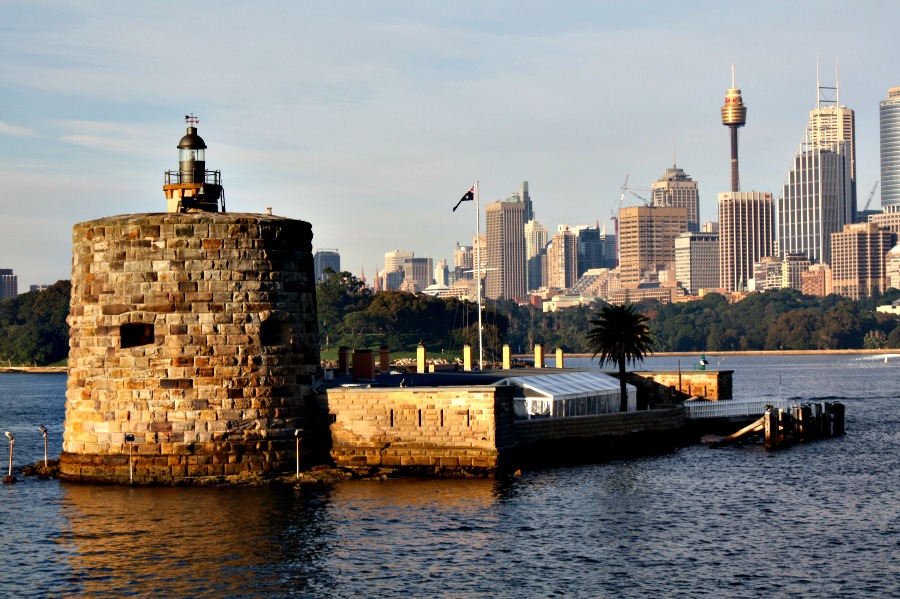
The fort itself was built in 1857, when there was genuine concern that Sydney Cove could be attacked as a consequence of the Crimean War. Its cannons are still in position. The island is also home to what is considered the most complete Martello tower in the world. For many years the island’s other main function was recording tidal and weather data, and it still collects tidal information today.
A convict Francis Morgan (no relation I hope!) was executed by hanging after committing murder. His body was left hanging for many months as a deterrent to others.
Dictionary of Sydney
The island is managed by Sydney Harbour National Park.
When will Fort Denison reopen? No confirmed date has been announced. Previously, a ferry ran several times daily from Circular Quay and the island was a stop on the Sydney Harbour Hop-on Hop-off service. Guided tours ran three times a day and included access to the Martello tower. Check the NSW National Parks website for updates before you visit Sydney.
In the meantime, Google Street View has a tour of the island if you want a look around.
Discover more of Sydney Harbour with these ferry rides
Cockatoo Island / Wareamah
Cockatoo Island started as a convict prison and shipbuilding yard. Today it is the largest island in Sydney Harbour and a UNESCO World Heritage site open to the public.
Wareamah is a Wangal clan place name, often translated as the place where eagles land. The Wangal people used the high ground for ceremonies and the surrounding waters for fishing.
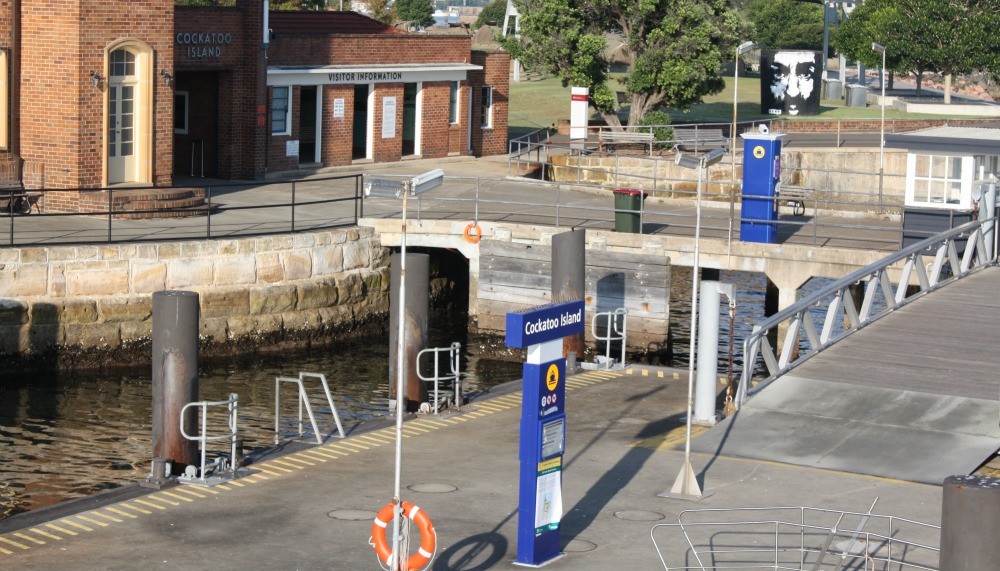
The island was first used as a convict prison in the early 19th century, and over the years, it served as a reformatory school for wayward boys and a base for training naval cadets.
During the Second World War the island was kept busy building and repairing vessels that saw service in the Pacific.
Several historic buildings remain, including the Convict Precinct, which houses the Guardhouse, the Solitary Confinement Cells, and the Chapel. There are also plenty of old industrial buildings to wander. We discovered when researching our family history that our ancestor Hugh Jones was an engineer on Fitzroy Dock in 1859.
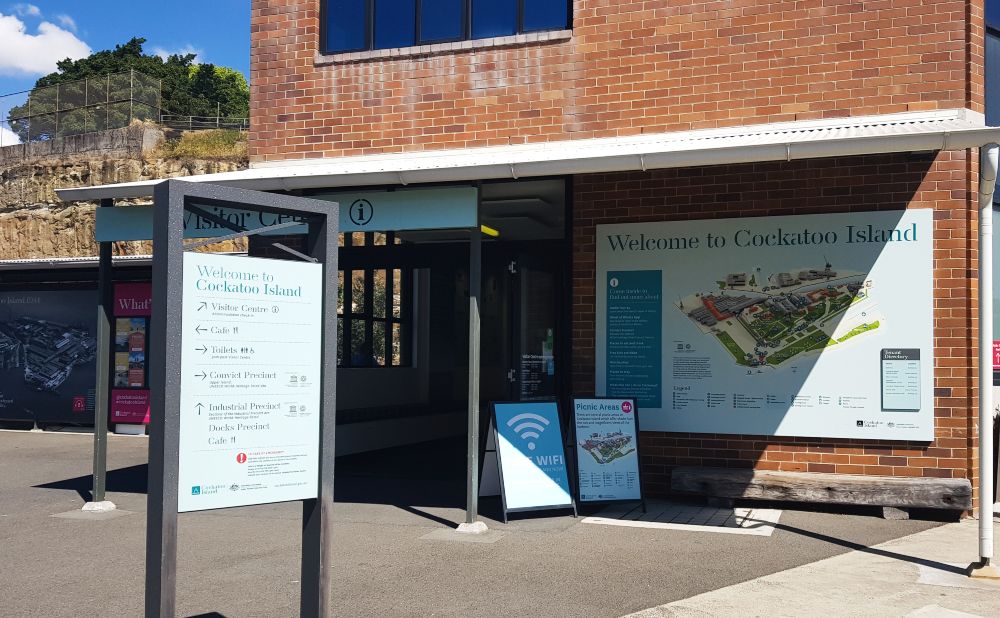
You can walk the various paths around the island, many offering unique views of the harbour.
If you like the idea of a night on the island you can book to stay in one of the restored properties or book yourself a campsite. You can bring your own tent or book one of theirs which are set up with everything you need.
The island’s facilities include tennis courts, a licensed café, bbq’s, and camp kitchens and a shower block for overnight guests.
What to do when you get there: Head to the visitor centre near the wharf and pick up a map for the self-guided walks. You can also pick up an audio guide or join one of the volunteer-led tours.
How to get there: Two ferry routes service Cockatoo Island. The F8 from Circular Quay and Barangaroo is the faster option. The F3 Parramatta River Cat is the better choice if you’re travelling from the west, coming from Olympic Park or Parramatta. Entry to the island is free.
Both the F8 and F3 accept an Opal card or contactless payment — our guide to Sydney’s Opal card covers everything you need to know.
Shark Island / Boowambillee
Boowambillee (booh-uhm-‘bil-ee) / Shark Island is neither the site of infamous shark attacks nor home to large populations of them but instead was named for its shape. The island sits within the traditional Country of the Gadigal clan, who used it as a fishing ground.
It is close enough to the Rose Bay seaplane terminal that you get a good view of the planes taking off and landing.
The island was the site of several shipwrecks before a warning light was finally installed in 1890.
It was used as a quarantine station in the 1830s and between 1871 and 1900 imported cattle and dogs were quarantined there.
Shark Island is a popular NYE fireworks venue and hosts a couple of other ticketed events each year, but mainly it is used by people with their own boat or kayak.
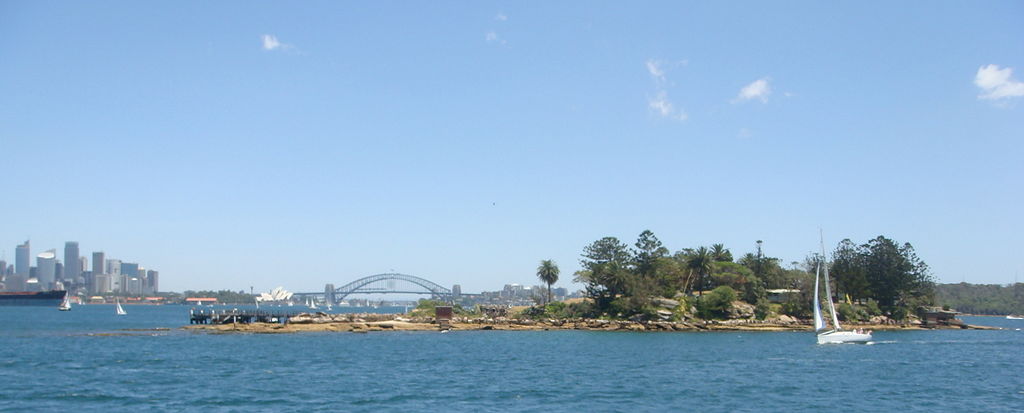
What to do when you get there: The island is mainly used for picnicking and paddling. There are sandstone grottos and rock pools to explore if you want to stretch your legs.
How to get there: The easiest option is the Captain Cook Cruises Harbour Discovery hop-on hop-off service, The $20 ticket covers the return ferry and the NPWS landing fee. If you’re arriving by private boat or water taxi, the $7 landing fee is payable separately via the NSW National Parks website or the Park’nPay app. Take a screenshot of your receipt — mobile reception on the island can be patchy. Only 500 people can use the island at once so check availability before you go.
Clark island / Billong-olola
A small island just off Darling Point near Double Bay, it’s mainly used by people arriving by private boat. The island sits within the traditional Country of the Gadigal clan, who used it as a base for hunting and gathering shellfish — practices that the Tribal Warrior cultural tours still reference today.
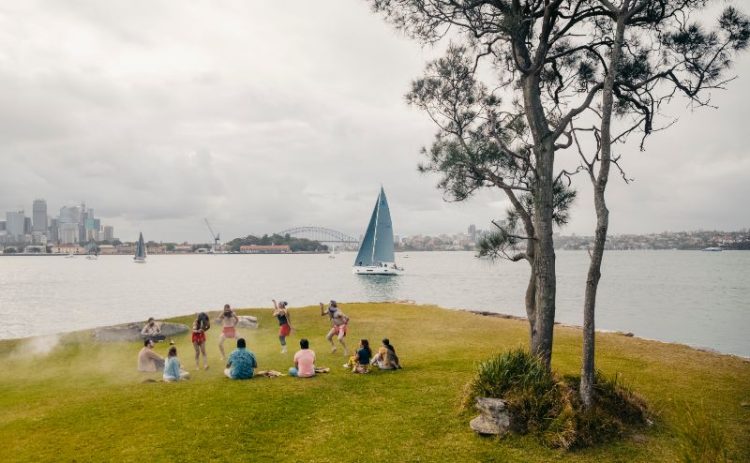
The island was named after First fleet Lieutenant Ralph Clark who in 1789 planted a vegetable garden here.
Clark Island is a popular spot to watch the NYE firework show with excellent views of Harbour Bridge.
There is good shade across the island, which makes it a reasonable picnic spot in warmer months. There are also short paths through the bushland if you want to walk off lunch.
What to do on Clark Island: The island is used mainly for fishing and picnicking. It also sometimes hosts special events like Wine Island.
How to get there: There is no scheduled public ferry. You can reach the island by water taxi or private vessel, or join the Tribal Warrior Aboriginal Culture Cruise, which includes a landing on the island with a traditional smoking ceremony and demonstration of traditional fishing and food-gathering methods. The $7 per person landing fee must be paid in advance through the NSW National Parks website or the Park’nPay app. If you’re joining the Tribal Warrior cruise, the fee is included in your ticket.
Goat Island / Me-Mel
With the indigenous name Memel or Me-Mel, meaning the eye, this island was once home to Bennelong and Barangaroo. In fact Bennelong told the early settlers that it was his island, handed down to him by his father. The NSW Government is currently in the process of transferring management of the island back to the Aboriginal community.
Goat Island which is just off the entry to Darling Harbour was initially a sandstone quarry for the new colony and later a gunpowder storage facility. It became the home of the first water police station and most recently a filming location for the Aussie police drama Water Rats. It is also a favourite spot to view the NYE fireworks show.
Where is it: The island sits west of the Harbour Bridge between McMahons Point and Balmain
What to do when you get there: The flagship tour is Convicts, Castles and Champagne, run by Sydney Tall Ships in partnership with NPWS. It covers the 1830s gunpowder magazine and convict barracks. Book through the NSW National Parks website or Viator. Availability fluctuates so check ahead before you visit.
How to get there: Access is strictly by guided tour only — you cannot land independently. Book through NSW National Parks or a licensed partner such as Sydney Tall Ships. The flagship tour is called Convicts, Castles and Champagne. Private boat mooring is not permitted.
Garden Island / Ba-ing-hoe
The Garden Island Heritage Centre is closed in 2026 due to ongoing wharf and seawall works.
Garden Island is a working naval base sitting east of the Royal Botanic Gardens. It is connected to the mainland and entry for civilians is restricted. Known to the Gadigal clan as Ba-ing-hoe, the island was a rocky outcrop where Gadigal people gathered oysters before it became a naval base.
The main draw for visitors has historically been the Royal Australian Navy Heritage Centre, which includes an interactive display on the 1942 Battle of Sydney — when Japanese submarines entered the harbour — and a working periscope from an Oberon class submarine. It is not currently open to the public and the F7 Watsons Bay ferry does not stop here while works are underway.
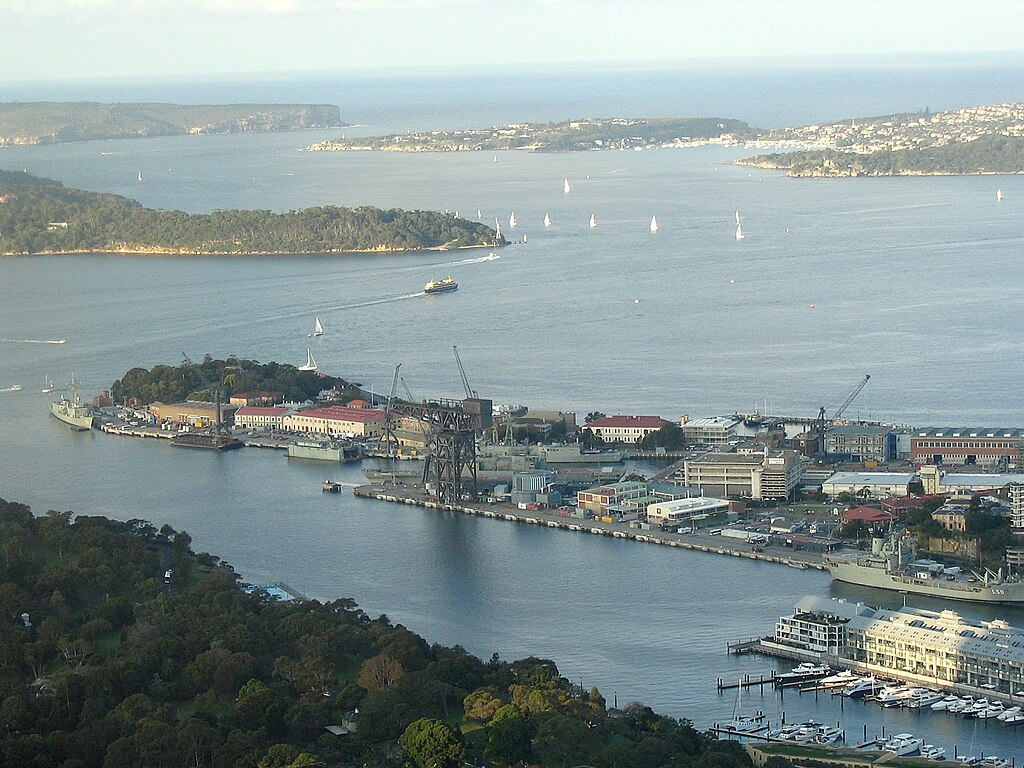
The island can currently only be seen from the water.
What to do instead: If you’re interested in naval history, the Navy’s museums cover some of the same ground and is worth a visit in the meantime. It’s a different experience from the Heritage Centre but worth the trip for military history enthusiasts.
How to get there: There is no public access in 2026. Check the NSW National Parks website for updates on reopening.
Rodd Island
Rodd Island sits in Iron Cove on the western side of the harbour, just off Drummoyne. The island sits within the traditional Country of the Wangal clan. Nearby Rodd Point contains ancient shell middens indicating the area was a consistent site for fishing and gathering.
It has an unlikely history. The NSW Government once used it for biological testing, specifically trying to find a way to reduce the rabbit population that had reached plague numbers across Australia. Some of the original buildings from that period are still standing.
It was the first of Sydney’s harbour islands to open as a public recreation reserve, and at its peak it had a dance hall that drew regular crowds. The US Army also used the island for training purposes during the Second World War.
How to get there: Rodd Island is difficult to reach without a private boat or kayak. There is no scheduled ferry service. A $7 per person NPWS landing fee applies, payable via the Park’nPay app or the NSW National Parks website.
Spectacle Island /Gong-ul
Spectacle Island sits in the Parramatta River end of the harbour, just off Drummoyne, within the traditional Country of the Wangal clan. It is not open to the public.
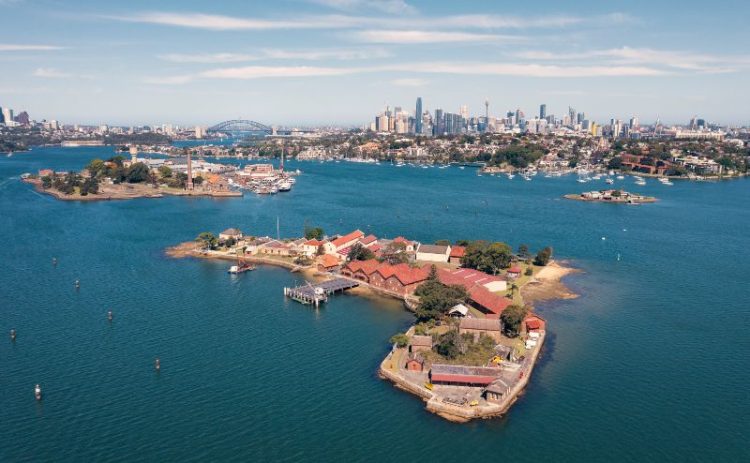
The island was originally two small islands joined by a narrow stretch of land — hence the name. It was known as Dawes Island in its early days. The name was recorded by William Dawes between 1790 and 1791, who noted it as the eighth island encountered when travelling up the harbour.
It has been used for munitions storage since the earliest days of the colony, first to keep excess gunpowder a safe distance from the settlement and later as the official storage base for the Royal Navy. Most of the buildings on the island date from that period and take up the majority of the available land.
Today it is home to a cadet training school and a repository for historic naval documents.
Snapper Island / Ar-ra-re-agon
Also recorded historically as Goora-rai-agon, Snapper Island sits in the Parramatta River near Birkenhead within the traditional Country of the Wangal clan of the Eora Nation. It is not open to the public.
Before being reshaped into the form of a ship in the 1930s, the island was a small rocky outcrop. It is best known for its role during the Second World War, when the American Navy used it for training purposes in 1942. Some historic structures from that period remain. The island is managed by NSW National Parks as part of Sydney Harbour National Park.
Booking a Tour of the Sydney Harbour Islands
Several islands are best experienced with a guide, and for some you have no choice — Goat Island requires a booked tour and Fort Denison tours are suspended in 2026.
Tribal Warrior Aboriginal Culture Cruise — Clark Island
The only regular commercial tour that includes a landing on Clark Island. You board the Mari Nawi with Aboriginal guides who cover the Indigenous history of the harbour and its landmarks before landing on Clark Island for a smoking ceremony and demonstration of traditional fishing and food-gathering methods. Available through GetYourGuide.
Captain Cook Shark Island Ferry
The most straightforward way to reach Shark Island without hiring a water taxi. The $20 ticket covers the return ferry and the NPWS landing fee. Shark Island is a request stop and may be skipped in rough weather — check the live ferry map before you go. The HOHO ferry also stops here.
Convicts, Castles and Champagne — Goat Island
Run by Sydney Tall Ships in partnership with NPWS, this is currently the main way to access Goat Island. Availability fluctuates so check ahead. Book through Get Your Guide
You can also kayak to Goat Island.
Booking tip: Check whether the $7 NPWS landing fee is included in your ticket before you go. Cultural cruises and tall ship tours generally include it; water taxi transfers usually don’t.
Frequently Asked Questions
How many islands are in Sydney Harbour? Sydney Harbour has eight islands. Five are accessible to the public: Cockatoo Island, Shark Island, Clark Island, Goat Island, and Fort Denison. The remaining three — Spectacle Island, Snapper Island, and Rodd Island — are either restricted or difficult to reach without a private vessel.
Is Fort Denison open to the public? No. Fort Denison is closed in 2026 for renovations. There are no tours or ferry services running to the island. Check the NSW National Parks website for updates.
Which Sydney Harbour island was a prison? Fort Denison, known to early colonists as Pinchgut Island, was used to punish unruly convicts with isolation and minimal rations. Cockatoo Island also operated as a convict prison in the 19th century.
Can you visit Goat Island? Only on a guided tour booked through NSW National Parks or a licensed operator. Independent landings are not permitted.
Can you do a tour of Sydney Harbour islands? Yes. Goat Island tours run through NSW National Parks and licensed operators including Sydney Tall Ships. Cockatoo Island offers volunteer-led tours and audio guides. Clark Island can be visited on the Tribal Warrior Aboriginal Culture Cruise. Fort Denison tours are suspended in 2026 while the island is closed for renovations.
For more information on visiting the Islands of Sydney Harbour, I recommend you visit the National Parks and Wildlife website
Did you know? Facts about Sydney Harbour Islands
If you are a regular reader you will know I love a bit of Trivia so here are a few facts we uncovered researching this piece. All things a true Sydney Expert should know!
According to the Dictionary of Sydney, Sydney Harbour once had 14 islands.
The ones we know most about are these five former harbour islands that have now been reclaimed.
- Bennelong Island – where the Opera House stands today was connected to the mainland when the old tram sheds that previously occupied the site were built.
- Glebe Island – Located in Blackwattle Bay, Glebe Island was only accessible at low tide until the late 19th century when a causeway was built.
- Darling Island – Mud flats separated this area from the mainland until a causeway was constructed in 1854.
- Berry Island – a popular picnic stop and home of the Gadyan Track, Berry Island was joined to the mainland at Wollstonecraft in the early 1900s by locals wanting easier access to the bushland.
- Garden Island – is no longer technically an island but as its open to the public and feels very much like an Island we included it above.
Have questions about things to see and do in Sydney?
Head over and join our Facebook Group and we will be happy to help.